
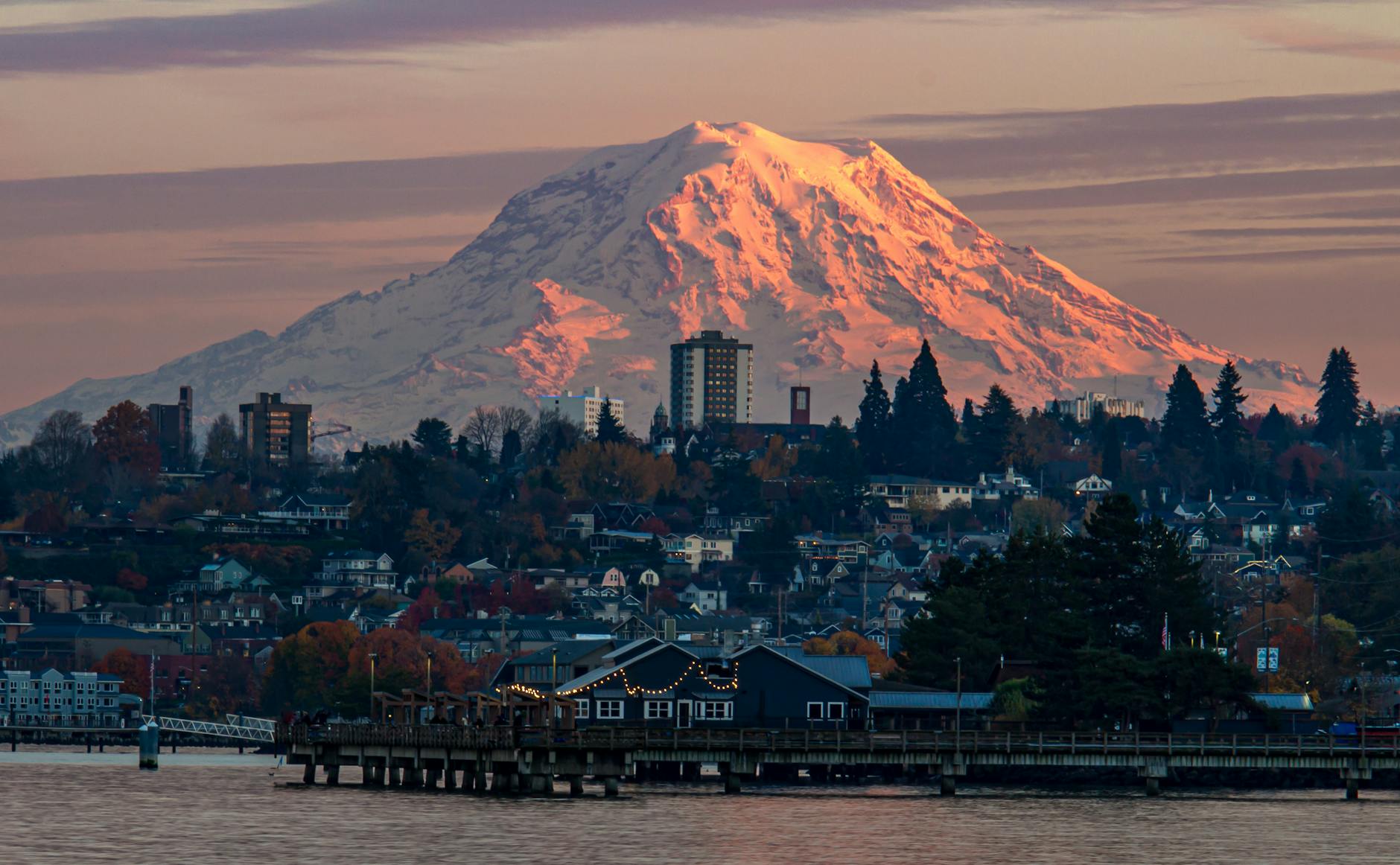
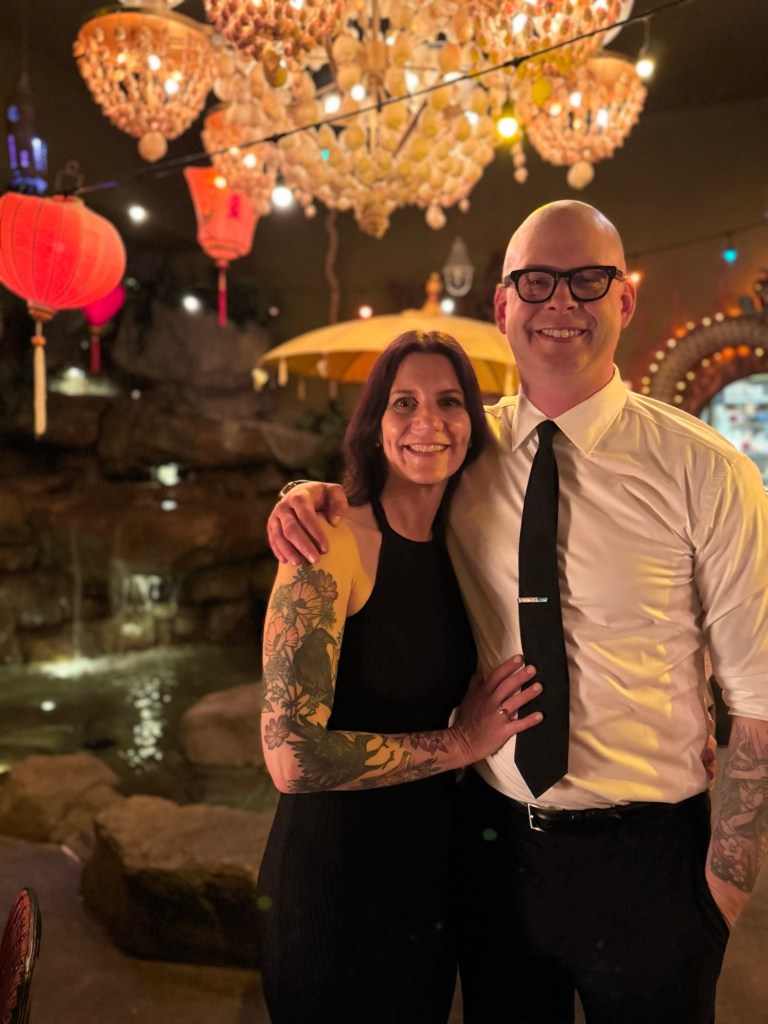
Last weekend, we were in the Seattle area to celebrate the deep love between our two wonderful friends, Alex and Jordan, as they made a lifetime commitment to each other in marriage.
Their house is at the base of Mt. Rainier. Every morning, we drove out to the main road in absolute awe of its power.
Mt. Rainier is a stratovolcano—one of those towering, iconic peaks that hold both beauty and danger within them. Many cultures view stratovolcanoes as sacred, associating them with gods, spirits, and the Earth’s raw power. They symbolize something beyond human control—forces that shape destinies as much as they shape landscapes.
I sometimes have likened a previous chapter of my life to Mt. Vesuvius and Pompeii—a catastrophe I didn’t see coming. I ignored the warning signs, only to find myself buried in the fallout of an unforeseen explosion, destruction beyond what I could have imagined.
But now? Now, standing at the base of this volcano, I saw it differently.
This was no longer Pompeii.
This was new ground.
Mt. Rainier, with its quiet energy brewing beneath the surface, wasn’t a threat—it was a reminder. A symbol of resilience. A lesson in paying attention, staying present, and embracing the richness that can grow in the aftermath of eruptions.
Because perception changes everything.
On Friday, we drove to Tacoma for pre-wedding cocktails with friends. The road was dark, rural, and soaked with heavy rain—visibility was low.
And I confessed to Jen:
“In the past, this would have put me in full-blown anxiety mode—sweating, gripping the wheel, convinced something bad was going to happen.”
But this time? I felt steady. I took one curve at a time, reminding myself, “We’ll get there when we get there.” I was different now.
I thanked Jen for always giving me a safe space to sit with my ugly parts and work on them. Maybe I was cured?
Then we got into Tacoma, made our way off the freeway, and at the very last left turn before our destination, we hit a blinking yellow arrow.
And I had never seen a blinking yellow arrow before.
I hesitated, trying to process what I was supposed to do—
HOOOOOONNNNNNKKKKKKKK!
The guy behind me laid on his horn like it was a full-blown emergency. And I panicked.
I punched the gas, turned without thinking, just wanting the honking to stop. And then—
Full-body panic.
Shaking, disoriented, desperately searching for a place to pull over and breathe. Watching the rain-streaked mirror, wondering if that car was following us, if his aggression was still coming.
When we finally parked, I exhaled and—laughed.
“I just said I was cured. And the universe was like, ‘Oh yeah? Let’s see, shall we?’”
Nope. Not cured yet.
But better than before.
At the wedding reception, we sat next to a fascinating woman—an artist who had actually climbed Mt. Rainier.
She told us about her life in NYC as a teacher and an artist, then her move back to the Pacific Northwest, her adventures, her teenage daughter. She shared one of her paintings with Jen, and it took her breath away.
They connected over something deeper—how they had both spent years doing things out of obligation rather than authenticity.
Her energy felt familiar and inspiring—a reminder that we can always find our way back to ourselves.
That night, as we drove back through the dark rain toward Mt. Rainier, I felt a deep, quiet happiness.
For Alex and Jordan and their love.
For the new people we meet when we’re open.
For Jen, and her growing urge to rekindle her artistic passions.
Rather than my anxiety, the car was filled with gratitude.
But just when I thought the universe was done teaching me for the weekend, my body had one last message:
Slow down.
I’d felt off all weekend—chills, sniffles, nothing serious. I chalked it up to travel fatigue.
But then, over Chinese food the night after the wedding, I realized something.
Nothing had any taste.
On the flight home, I still felt shitty, but it wasn’t until I laid down and Jen started burning sage and I smelled nothing that it hit me—
“Bro, do I have COVID?”
I took a test. Positive.
Then Jen took a test. Also positive.
Fuckin’ COVID.
I had forgotten this was even a thing anymore. And that made me really sad.
Because we, as a society, were so desperate to move on, we willed ourselves to forget. We shoved it into the category of “just the flu,” but—
This bitch is NOT the flu.
We were laid out for four days. The symptoms were determined and mercurial—one moment a headache that wouldn’t quit, the next a weird cough, then sneezing, then crippling fatigue.
We called out of work. Masked up for essentials. Bought every item at Sprouts that had the word “Immunity” on it.
Then we made two loaves of sourdough and our soon-to-be-infamous “Lesbian Penicillin”—a chicken orzo soup packed with turmeric, ginger, and garlic.
Our bodies demanded stillness. So we listened.
Volcanoes don’t explode without warning—there are always signs if you know how to look for them.
The earth shifts.
The air thickens.
The pressure builds.
And whether we heed those warnings or ignore them…whether we see them as omens of destruction or signs of transformation…
That’s all about perception.
Years ago, I only saw volcanoes as destructive forces, disasters waiting to happen.
But standing at the base of Mt. Rainier, I understood it differently.
It’s not just about eruptions—it’s about what comes after.
The fertile ground.
The new landscapes.
The resilience of everything that chooses to grow again.
Even this past weekend—my quiet pride in feeling less anxious, the sudden jolt of panic in traffic, the deep gratitude of witnessing love, the forced stillness of illness—felt like reminders of that same lesson.
We’re never fully “cured.” Life will always test us.
But we adapt.
We shift.
We learn.
Because volcanoes don’t just explode once and stop.
They shape landscapes over time.
And maybe we’re the same—never fully static, always in motion, forming, rebuilding, becoming—again and again.
