
Lately, the lines between teaching and living feel almost invisible.
I’m reading The Alchemist with my students right now — a story about following omens, trusting the invisible, surrendering to the journey.
And maybe because it’s fresh in my head, or maybe because life always hands you the metaphors you need, I’m seeing its lessons everywhere.
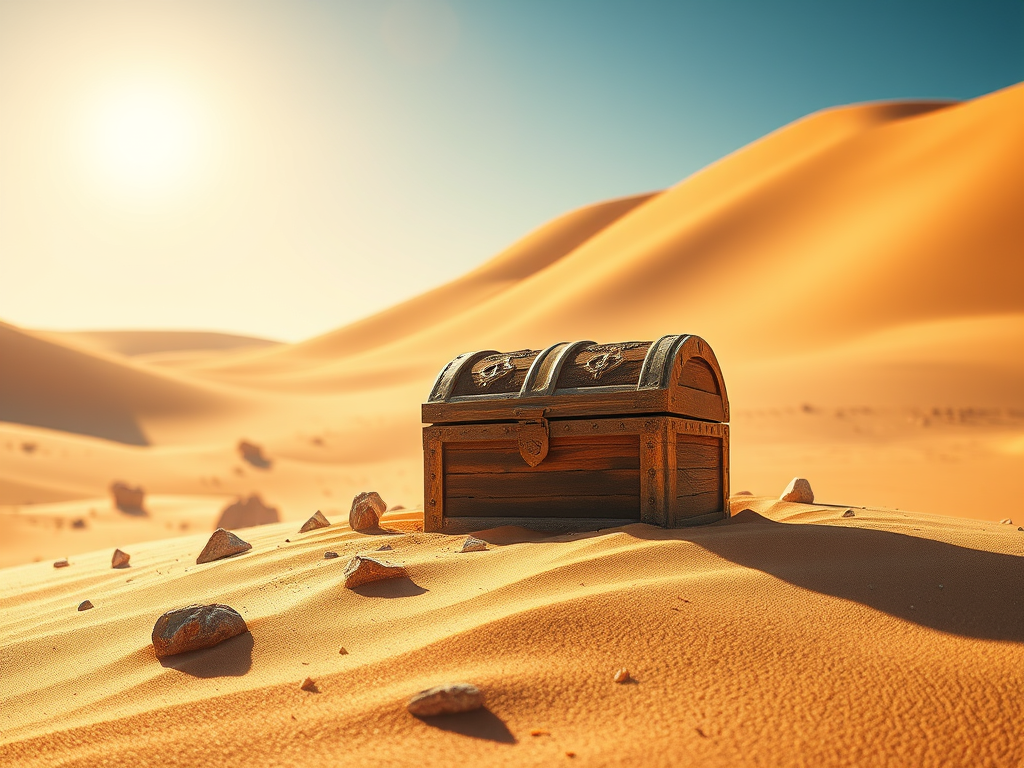
In the classroom, we trace Santiago’s path across deserts and marketplaces, talking about treasures and Personal Legends.
At home, I watch someone I love standing at the edge of his own journey — heart pounding, eyes wide, aching to know if he’s ready.
And I find myself thinking:
We are always standing in some kind of desert.
We are always being asked to trust what we cannot see.
In The Alchemist, Paulo Coelho writes about men seeking gold — their Personal Legends — without wanting to actually live them.
They wanted the reward, but not the journey.
They wanted the treasure, but not the transformation.
And sometimes, without meaning to, we do the same thing.
We rush through the experience in our hurry to claim the prize.
We forget that the gold was never the goal.
The gold was supposed to be what we became in the living.
This past week, that lesson has been unfolding at home in real time.
The kiddo is about to start high school — standing at the edge of a whole new world.
He’s smart and kind and ready in ways he can’t fully see yet.
And still, he’s nervous.
His eczema has flared up, his skin reacting to all the invisible weight he’s carrying after “Spring Fling” orientation last week and promotion pictures today.
He’s calling older friends, trying to gather information, trying to map every corner of the unknown before he even steps into it.
He’s worried about honors math, even though he tested at a 10th-grade level just a few months ago.
He wants guarantees, like we all do when the road ahead looks long and unfamiliar.
And standing beside him, I feel two things at once:
- Fierce, aching protection.
- And the deep, steady knowing that I can’t walk this for him.
I can’t be the one to hand him his courage.
I can only make sure he knows he’s allowed to feel everything he feels.
I can only hold the space — steady, safe, and real — while he steps forward at his own pace.
In the end, his confidence won’t come from knowing all the answers ahead of time.
It’ll come from living through the questions.
In The Alchemist, Coelho warns how easy it is to overcomplicate simple truths.
He writes:
“Men began to reject simple things, and to write tracts, interpretations, and philosophical studies. They also began to feel that they knew a better way than others had.”
We still do it.
We make charts and schedules and five-year plans.
We try to outthink fear.
We convince ourselves that certainty will save us.
But maybe it’s simpler than that.
Maybe what saves us is showing up with open hands.
Maybe the real skill is learning how to sit inside the unknown without needing to control it.
The world was always meant to be our teacher, Coelho says.
Not through complex theories, but through simple things:
A branch leaning toward the sun.
An eagle gathering twigs for a nest.
A grain of sand, resting exactly where the wind left it.
The desert doesn’t explain itself.
It simply is.
And maybe that’s the point.
When the boy in The Alchemist stands in the desert, the alchemist tells him:
“You are in the desert. So immerse yourself in it. You don’t even have to understand it. Just contemplate a simple grain of sand, and you will see all the marvels of creation… Listen to your heart, it knows all things.”
It’s not about mastery.
It’s not about conquering fear or mapping every twist of the road ahead.
It’s about being willing to be present.
Willing to belong to the mystery.
Willing to trust that the journey will make sense one breath at a time.
Here at home, that’s what we’re trying to do.
We can’t solve high school nerves with a map.
We can’t guarantee a smooth path.
But we can keep the space simple.
We can notice small wins.
We can breathe together through the hard parts.
We can remember that the grain of sand — the little ordinary moment — holds the whole miracle if we let it.
Maybe that’s what growing up is for him.
Maybe that’s what parenting is for us.
Maybe it was never about conquering the desert.
Maybe it was always about learning how to stand still inside it — together — and trust the wind.
Maybe that’s what The Alchemist was trying to teach all along — not just Santiago, not just my students, but all of us.
That the treasure isn’t in having all the answers.
It isn’t in racing ahead.
It isn’t even in understanding the desert completely.
It’s in standing inside it, heart open, trusting that every step — even the uncertain ones — is part of the way.
And when the path feels heavy, or the air feels too vast, or fear rises up loud and stubborn,
maybe all we need to do is look down — at a single grain of sand — and remember:
Everything we need was here all along.
We just have to stay awake enough to see it.
