
When the wildfires struck California last season—one of them dangerously close to our own backyard—Jen and I finally packed a Fire Go Bag. Well-stocked and easy to grab: copies of important documents, cash, medications, flashlight, face masks for smoke, a change of clothes, non-perishable snacks, and enough water to get us through the first 24–72 hours if we can’t return home. Maybe a flash drive with irreplaceable photos. It’s not everything we own—just everything we need.
That experience made me realize: we don’t just need Fire Go Bags. We also have a hunker-down kit for storms and power outages. I’ve got a beach go bag this summer—stocked with a book, towel, journal, and sunscreen—for my slow reentry into myself.
And now, we’ve assembled something new: the Protest Go Bag.
It now lives in the closet with our other Go Bags.
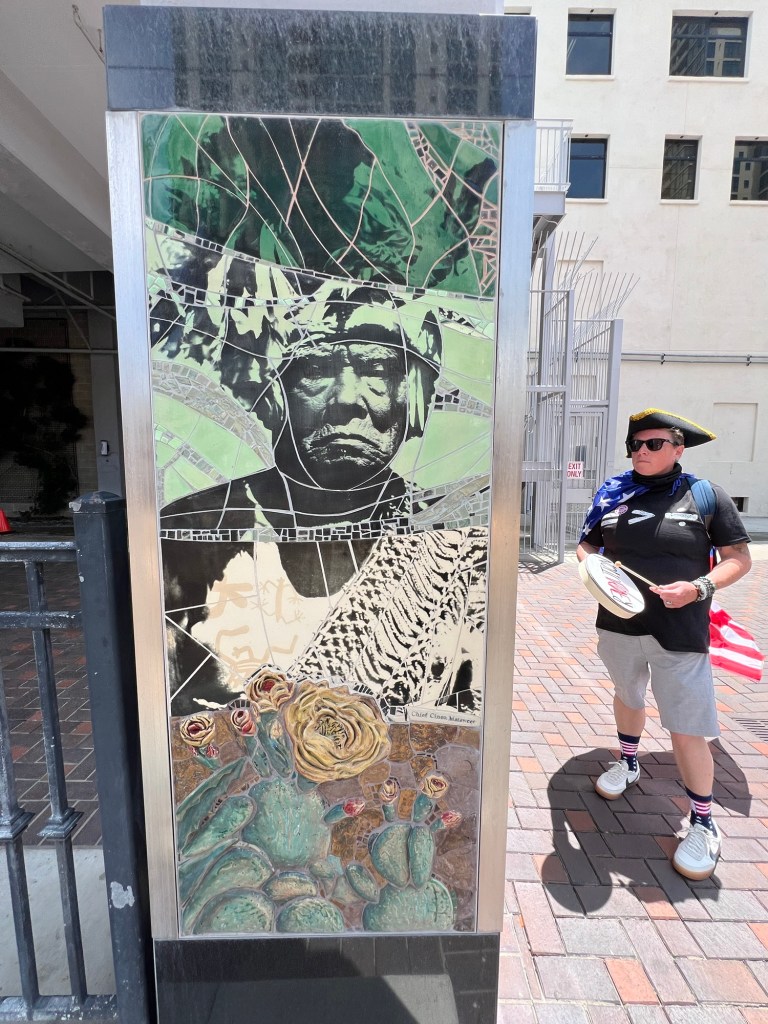
Inside are water bottles, a first aid kit, sunscreen, face masks, markers, my American flag cape, eagle socks, protection stones (hematite, black tourmaline, amethyst), a drum, and a Revolutionary War tricorn hat. Because sometimes, a crisis isn’t just personal—it’s collective. It’s not your house on fire. It’s your country.
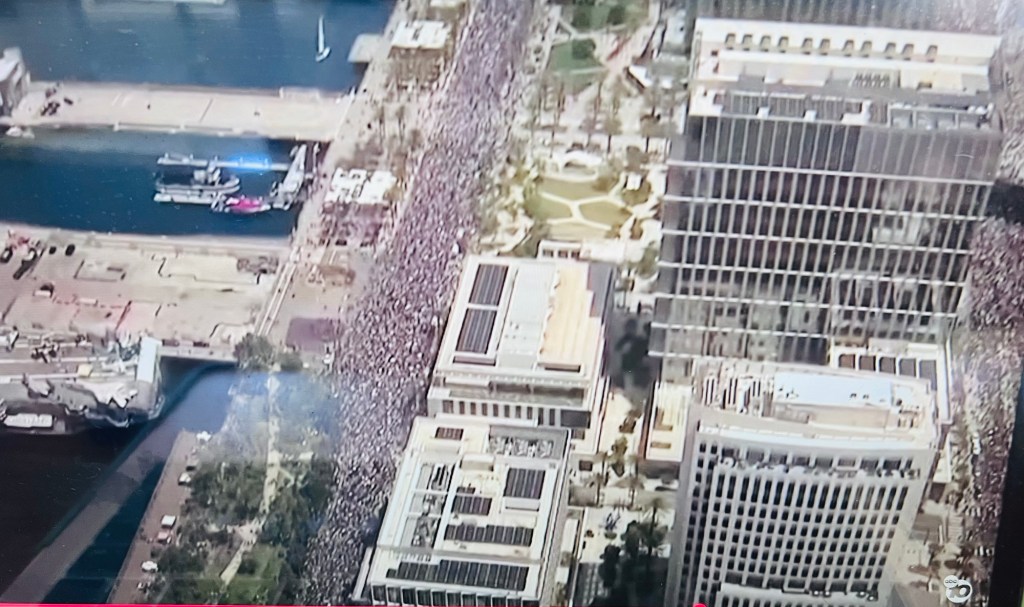
We brought that bag to the “No Kings” protest for democracy in San Diego this weekend—one of over 250 coordinated demonstrations across the U.S. and abroad. Reports estimate around 12.5 million people showed up in total, making it the largest mass protest in American history. In San Diego alone, there were over 60,000 of us, flooding the streets like a rising tide.
We woke up in the morning to devastating news: a Minnesota state representative had been assassinated along with her husband. And separately a Minnesota senator was also targeted and shot in his home with his wife. That set the tone. There was a heaviness in our hearts. A knowing. A deep grief layered under our resolve. It reminded us what’s really at stake—not just policy, but people. People with families. People trying to serve. People being hunted for their ideas.
We’ve protested before. At the Hands Off event back in April, the energy was righteous but smaller—mostly older activists, weathered hippies with well-worn signs. This time the crowd was younger, louder, more creative. People brought their own brands—homemade shirts, doctored flags, bubble machines, stickers, megaphones. Protest as public art. Protest as therapy. Protest as medicine.
One little girl—maybe seven years old—stood near the edge of the crowd and suddenly shouted, “Fuck Trump!” And like clockwork, about fifty people around her joined in. It was wild to see a child light that kind of fuse, and while I don’t personally lean into insults or profanity as my default protest language—it can feel like low-hanging fruit—I understood the emotion behind it. The raw frustration. The need to name the source of fear. Even if I might choose different words, the sentiment was loud and clear: people are hurting, and they want to be heard.
Another woman caught my eye, pointed at my drum, and asked, “You ready to start something with me?” Then she turned to the crowd and shouted, “SHOW ME WHAT DEMOCRACY LOOKS LIKE!”
And in perfect call and response, the crowd roared, “THIS IS WHAT DEMOCRACY LOOKS LIKE!”
I banged my drum like it was the revolution.
Some brought signs. Some brought booming voices. Some brought only their presence—but that was more than enough. Because what makes a protest powerful isn’t just the noise. It’s the intention. There was frustration in the air, yes—but not hate. There was rage, but also reverence. There were surges of emotion that brought both Jen and me to tears at different moments. It was overwhelming in the best, most human way.
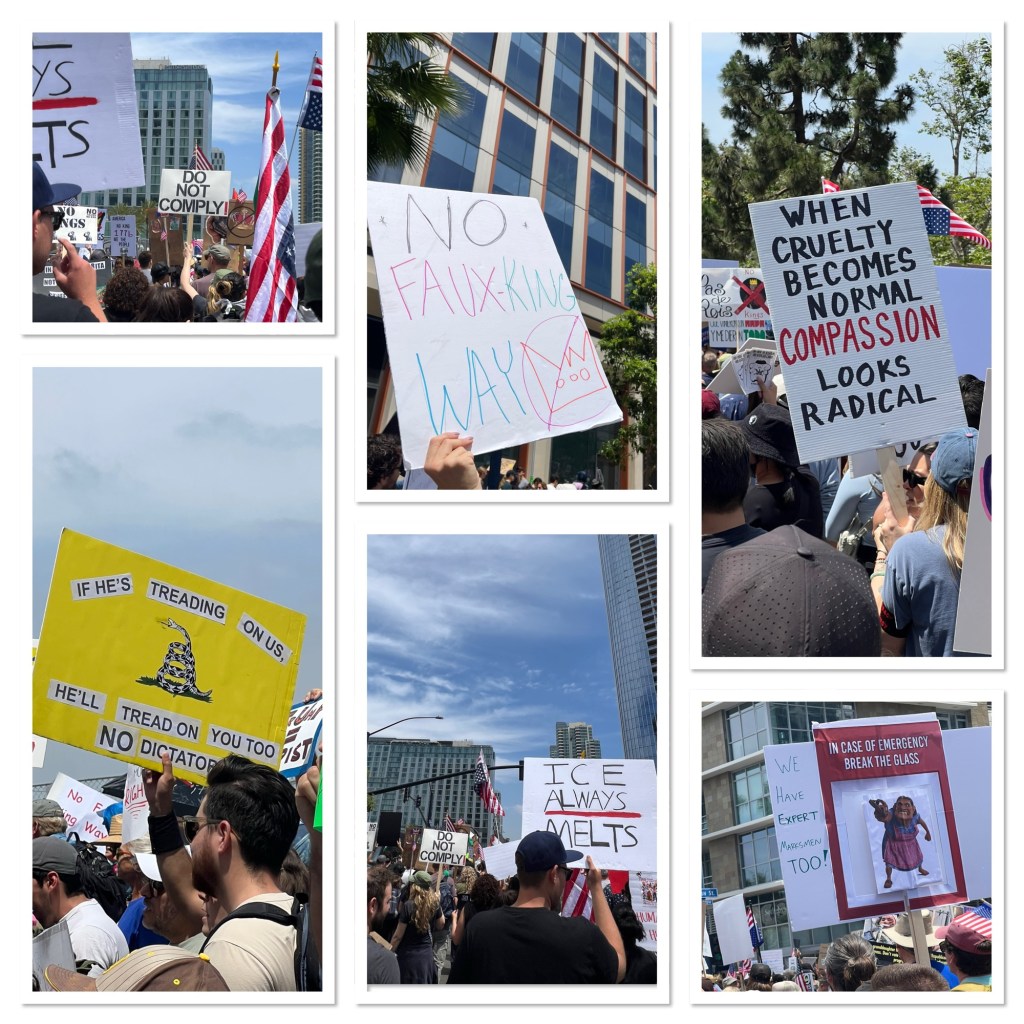
We saw upside-down American flags—symbols of national distress. And that’s exactly what this is. We’re in distress. We started this country with “We the People,” and that’s where we’re returning. Not to a party line, but to the promise of liberty, justice, and dignity for all.
If you’re someone who looks at protests like this and feels uncomfortable or dismissive—I understand. But I ask you this: If millions of people are showing up, not because they were paid, not because it’s easy, but because they feel a deep sense of civic grief and urgency, isn’t that worth listening to?
You don’t have to agree with every policy or chant or flag to understand that something is deeply off. This isn’t about Democrats or Republicans. This is about regular citizens saying, enough. People who are watching our foundational principles being twisted, who are scared for their kids, their rights, their country—and are refusing to go quietly.
I’m not a die-hard liberal. I’m a queer woman with lived experience, whose values are shaped by love, safety, and a belief that there has to be room in this country for all of us. When someone online recently accused me of hating the American flag because I supported a Pride event, I reminded her that freedom means the right to raise that flag too. The American flag doesn’t belong to one party. It belongs to all of us. And the brave people who died under it fought for the very freedom to disagree, speak out, and be seen.
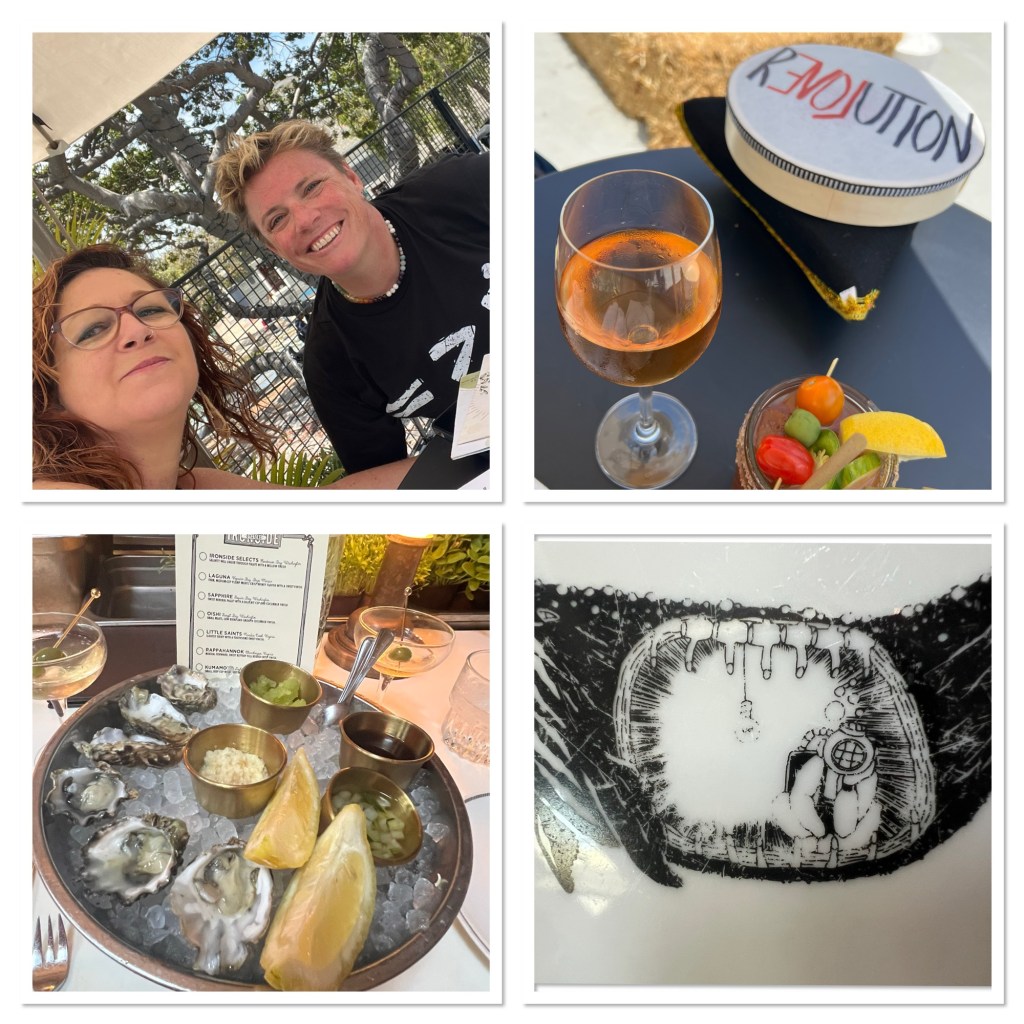
We ended the day walking to Seaport Village, sharing a salad and sipping strange orange wine on the bay. Later, we rode the trolley home with aching feet and full hearts. We toasted with oysters and dirty martinis in the evening—because sometimes, joy is resistance. Our kiddo even said he was proud of us. And we’re proud of him, too—for noticing.
Some folks told us they had a bad feeling about the event. We honored their concerns, stayed alert, and kept our eyes open. But for us, the greater risk would’ve been not going at all.
So yes—the Protest Go Bag is packed and ready for next time. Because next time will come. Until then, we’ll keep showing up—with our stones, our signs, our sore feet, and our open hearts.
Because we’re not just fighting for what’s wrong.
We’re showing the world what’s still worth fighting for.
