
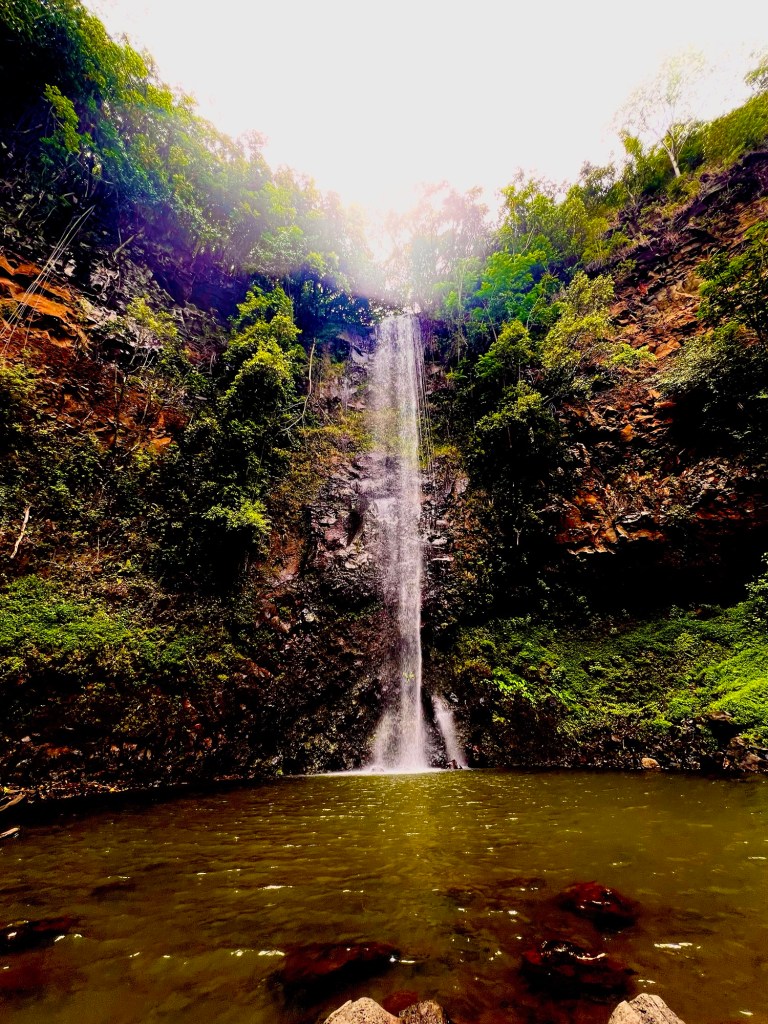
The joining of the waters. The uniting of many flows.
A few of our new local friends and tour guides this week have generously shared their knowledge—stories of this island’s history, culture, and language. We’ve been learning the deeper meanings behind words we thought we knew: that Aloha isn’t just hello or goodbye, but a sacred expression of love. That Mahalo goes beyond thank you—it’s a recognition, a breath of gratitude rooted in presence.
We’ve learned about the land itself: no natural predators here, which explains the wild chickens and pigs roaming freely. But of course, the most dangerous predator—humans—made their mark long ago. Sugarcane plantation owners once bought up the land after locking away the queen. They outlawed the native language and imported laborers instead of paying Hawaiians a fair wage. The exploitation echoes still—how quickly greed rewrites culture. And how familiar it sounds, even now, back on the mainland. When will we learn?
Today, tourism has replaced sugar as the island’s primary industry. And I want to believe we’re giving more than we’re taking—choosing local tours, tipping generously, embodying the spirit of Aloha in our presence and our pace.
But here’s the thing: paradise doesn’t dissolve your inner weather. It amplifies it.
If you flipped through my phone, you’d see three smiling musketeers: a picture-perfect family vacation. And it is that. But also, it’s been… more. Bigger. Harder. Messier. It’s been real.
There’s a rhythm we’ve developed back home, and changing location disrupted it in ways I wasn’t prepared for. My anxiety has flared in ways that caught me off guard—like a storm system I thought I had outgrown.
Because here’s the truth: I love going with the flow only after I’ve meticulously researched every possible scenario for disaster. Planning has always been my way of feeling safe. And when I plan, I do it hard—so when things veer off course, my nervous system can’t always pivot as fast as the itinerary.
Add a teenager to the mix, and you get a mirror held up to every ounce of your emotional flexibility. He’s just being himself—curious, independent, sometimes moody, sometimes lit up—but I’m learning (on the fly) that traveling with a kid requires constant on-the-spot navigation. And for a recovering people-pleaser, trying to make everyone happy all the time—including myself—is a recipe for burnout. And let’s be honest: hormonal mood swings are not just for teens. Mine still show up too.
God bless Jen for her patience. No one’s fighting—but there’s been a strange pressure, this unspoken swirl of trying to manage each other’s happiness. Like we’re three different rivers trying to meet and flow together without flooding the banks.
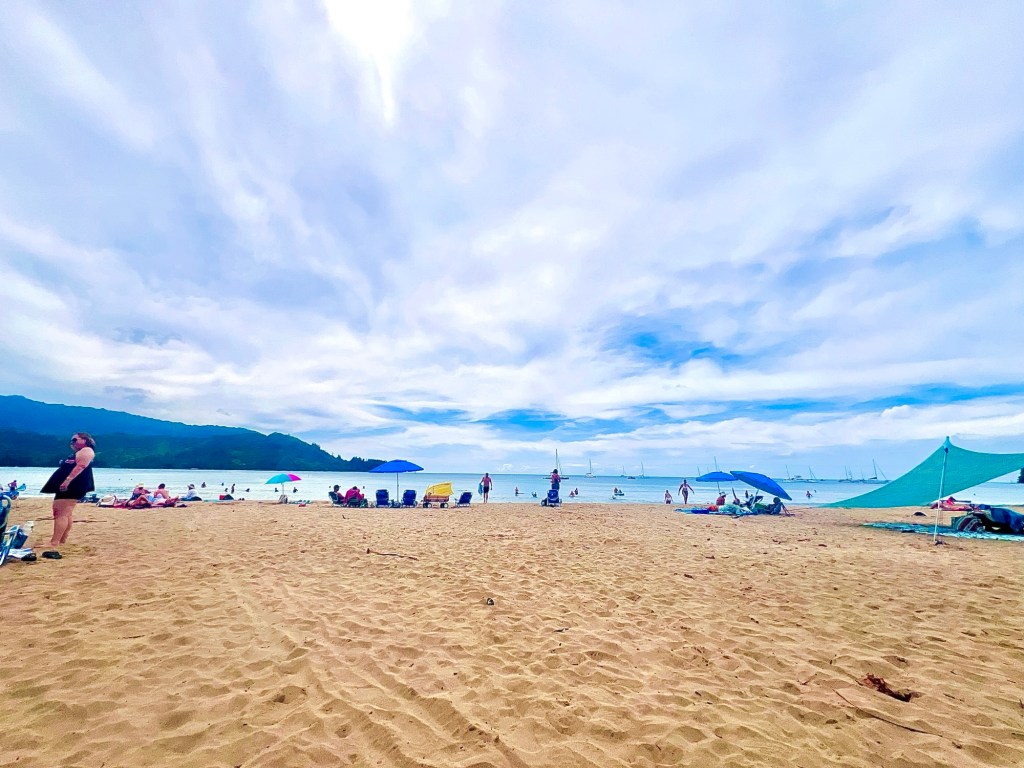
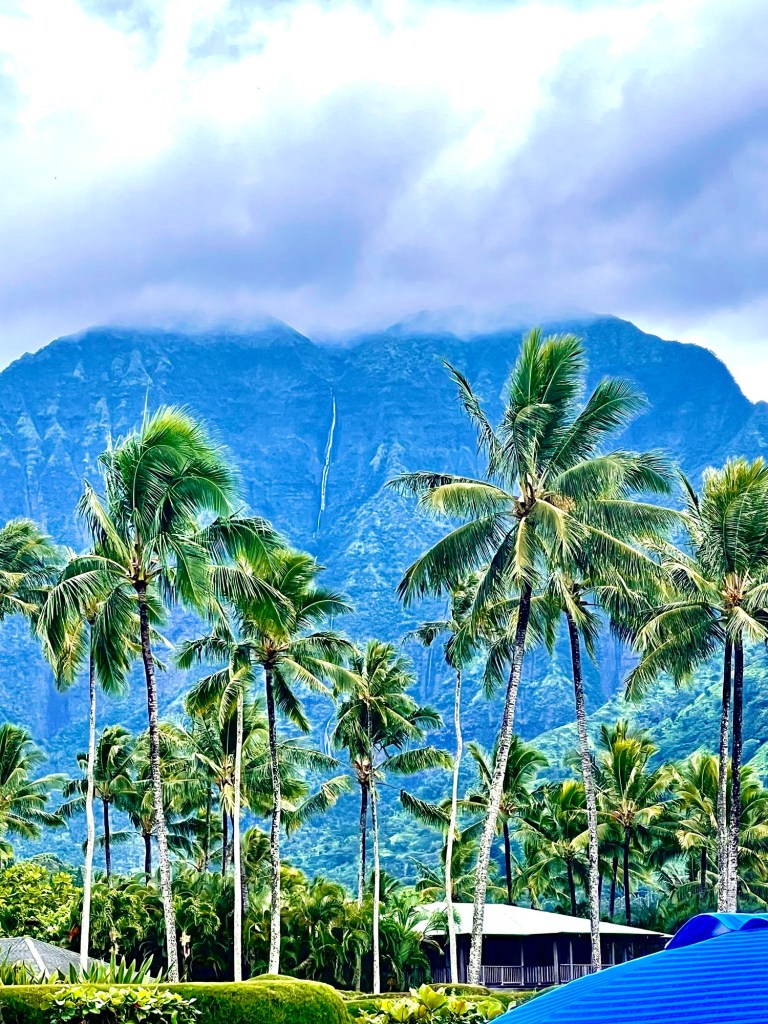
The other day, we drove north to Hanalei. We floated in the ocean beneath the watchful Napali cliffs, snorkeled in calm water, and ended the day with delicious poke and deviled spam eggs at a queer-owned UFO bar. It was magical.
Then came kayak day.
We had to strap kayaks to the roof of the Jeep—me silently spiraling while the owner demonstrated how to use the ratchet straps. I nodded. I smiled. I dissociated into catastrophic what-ifs: What if they fly off on the highway? What if we hurt someone? What if we damage the rental or get stuck or die? All while Jen asked, “Are you okay?” and I said, “Yep!” and pretended everything was fine.
Spoiler alert: It was fine.
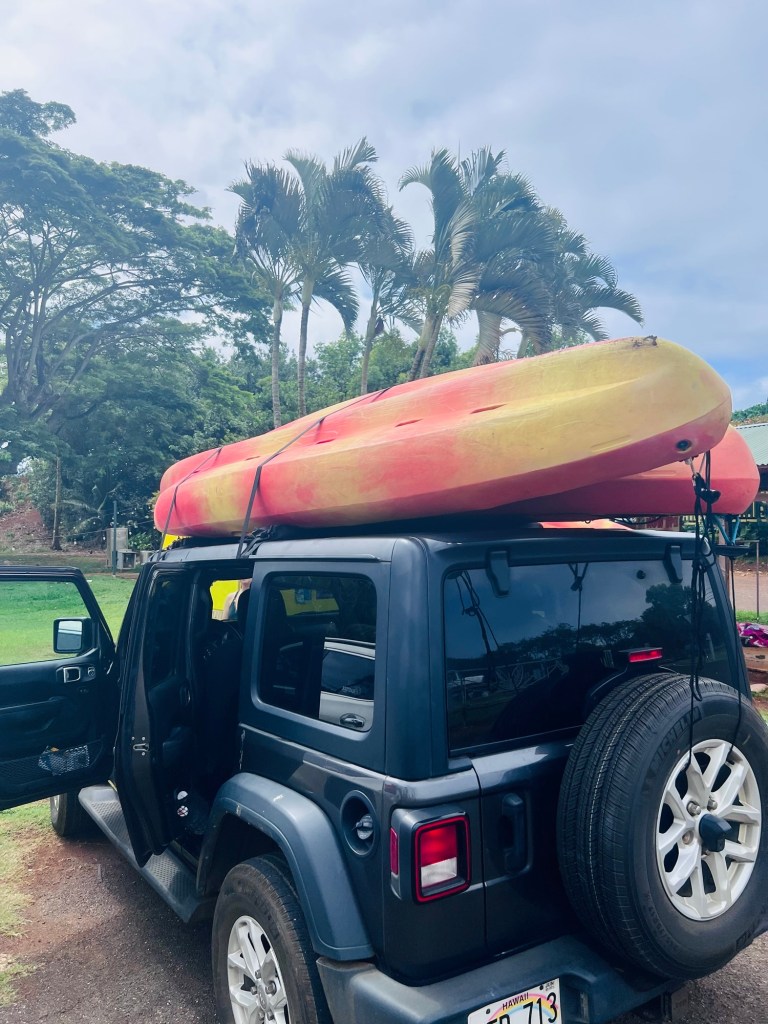
Better than fine, actually. The owner not only strapped the kayaks to our Jeep, but offered to come pick them up for us after we were done. A kind man helped us unload. We paddled upstream under jungle canopies, hiked to a secret waterfall, swam, ate lunch, laughed. It was beautiful. The universe took care of us. And still—I hated myself a little for letting Becky win.
That’s what I call my anxiety now: Becky. Because she’s not me, not really. She’s a bitchy backseat driver who takes over the wheel in moments I wish she’d stay quiet. And while Becky still shows up (like when Jen lost the river map and I momentarily believed we’d have to survive off guava and rainwater until rescue), her power over me is shrinking. What used to take me out for days now fades within minutes. That’s growth. That’s the work.
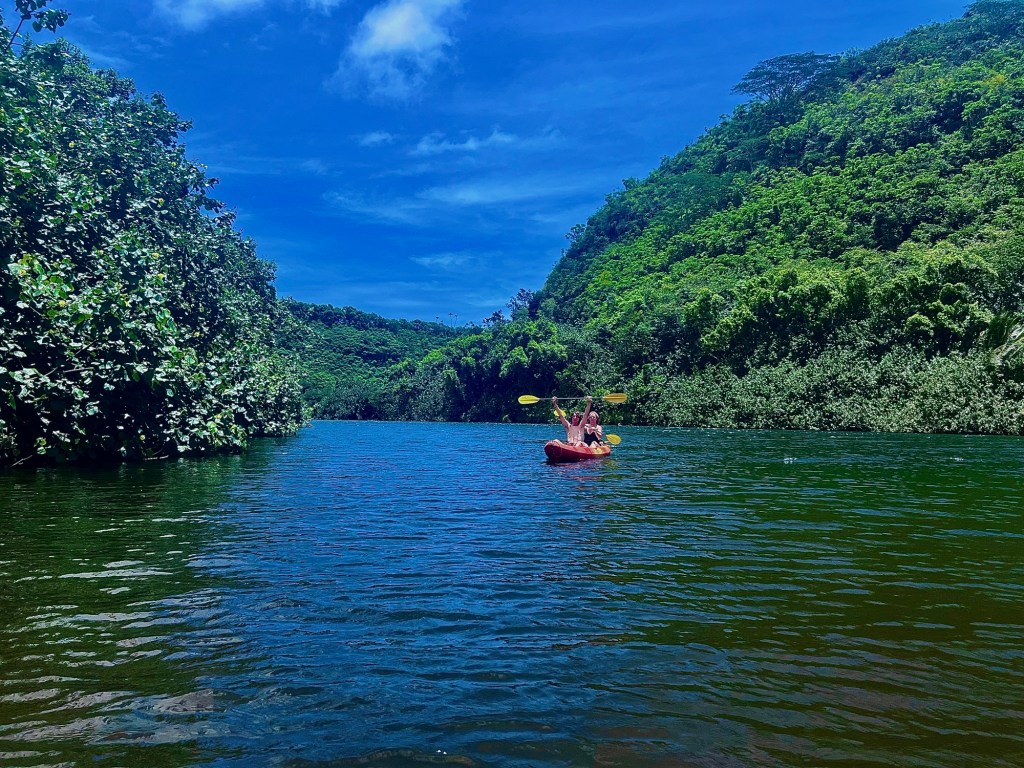
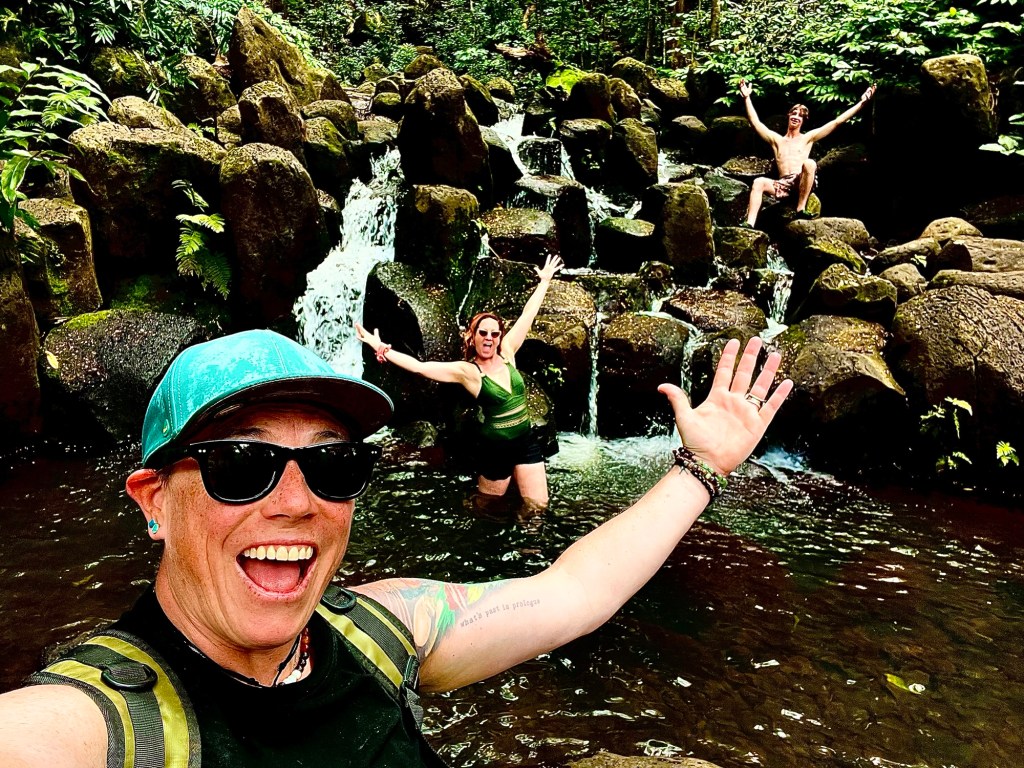
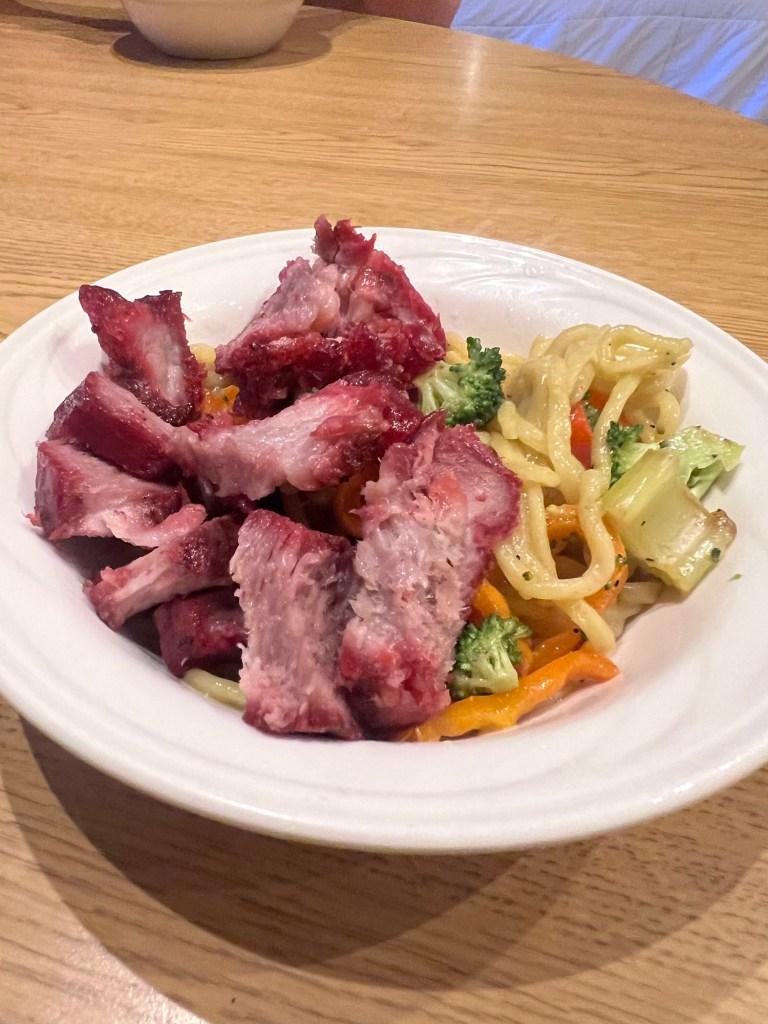
Later that day, I fell flat on my ass in the river trying to get back in the kayak. Public splat. Instant karma. But I laughed, eventually. We splashed each other on the paddle back, made char siu pork and lo mein with local noodles, and feasted like royalty.
The next morning brought umbrella drinks at the Poipu pool and some quiet reconnection. Meanwhile, the kiddo struggled to get back into the condo because he couldn’t find the door code we sent to his phone. It was a great teaching moment—how to problem-solve, how to read a map, how to trust yourself. The lesson wasn’t just his. It was all of ours.
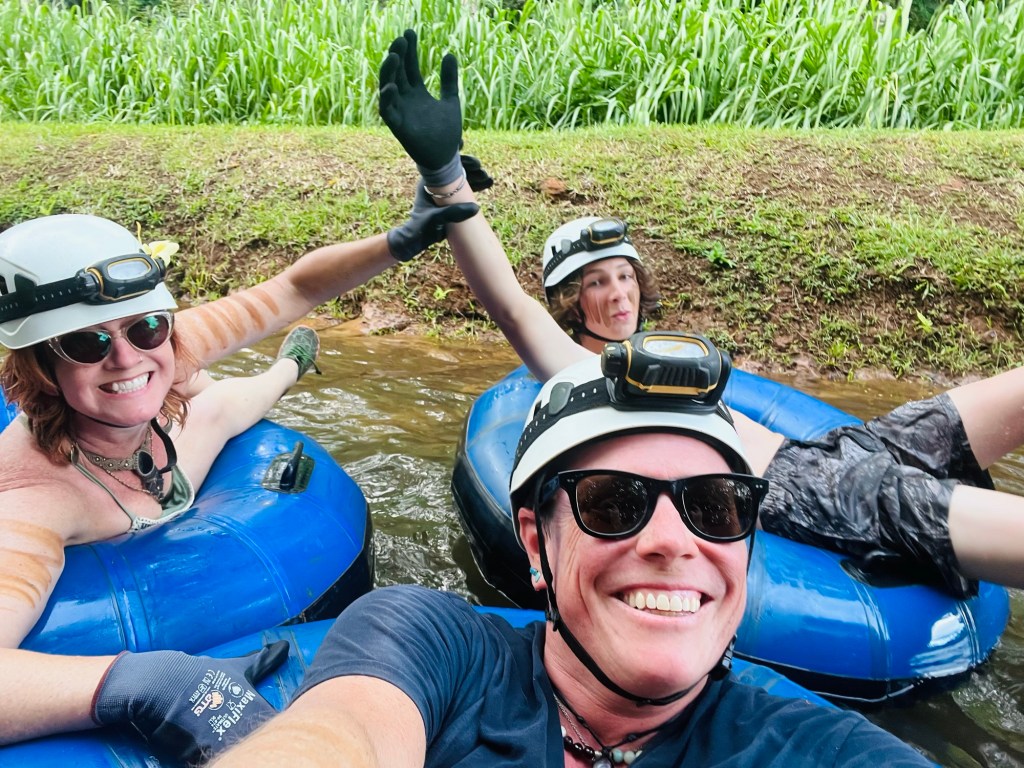
That evening, we tubed down an old irrigation ditch dug by the hands of the very people whose stories we’ve been learning. Their labor, erased. Their culture, stolen. And yet—there we were, floating in the water they redirected, laughing and learning and loving. All of it converging.
Later, back in Kapaʻa, we split up again. Skatepark for him. Art walk and local stalls for us. We found a Christmas ornament and a dreamcatcher that felt like it had been waiting just for us.
And that’s the thing. Ke Hui ʻana o nā Wai—the convergence of the waters—doesn’t mean stillness. It means meeting. It means crashing sometimes. It means flowing into one another, carrying what we carry. Some of us come in hot. Some of us arrive steady. Some days Becky shows up with a bullhorn. Other days, she sleeps in.
But we are learning how to meet each other where we are. To be a family on the move. To find rhythm in the disruption. To make peace not just with the map, but with losing it.
Because maybe the point isn’t perfect planning. Maybe the point is just this: to show up fully, in all our mess and grace and learning, and let ourselves be changed by the waters we enter.
